


A general warranty deed combines a property conveyance with promises about title. Those promises are not proof that no defect exists, and a downloadable form does not establish that a transfer will be valid or accepted for recording. The deed’s wording, exceptions and governing law matter.
Use the three general examples below to understand a deed’s structure and prepare questions for a qualified local lawyer. They are educational examples, not forms ready to sign or record. Do not use an unreviewed example for a transaction.
Three general warranty examples
Each example has an editable Word file and a matching PDF. The PDFs show the layout; neither format proves legal suitability. Review the actual provisions, signing capacity, tax statements and certificate requirements with a lawyer before adapting the text.
Example 1: grantor signature and name
This one-page example contains the party and property fields, covenant language, and an explicit grantor signature and printed-name field. Check whether its promises and execution provisions suit the intended transfer.
General warranty example 1: grantor signature and name
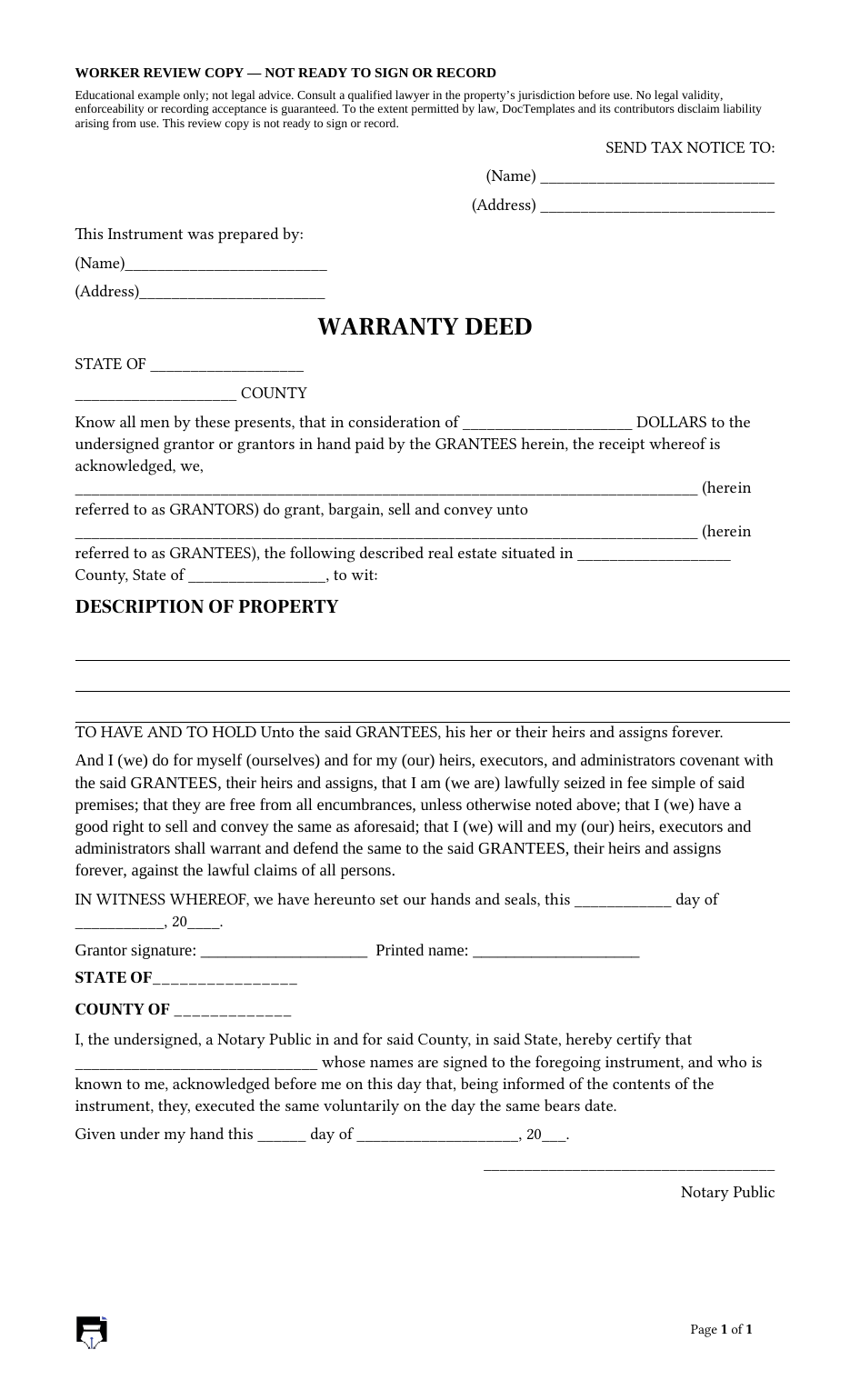
General warranty example 1: grantor signature and name
Example 2: separate execution areas
This two-page example includes separate execution areas. Its transfer-tax statements, required signers and certificates need jurisdiction-specific review; do not select a tax treatment simply because a box or statement appears in the file.
General warranty example 2: separate execution areas
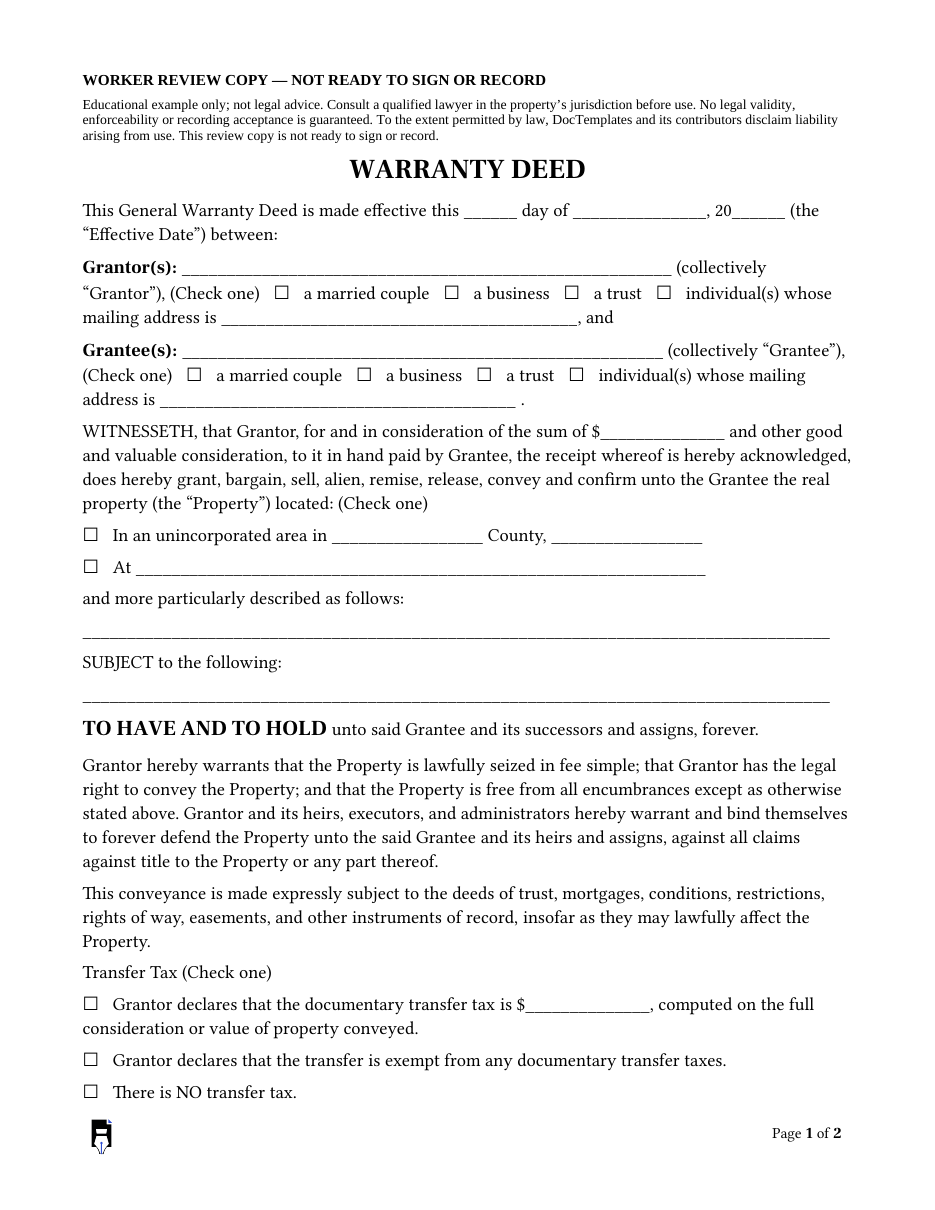
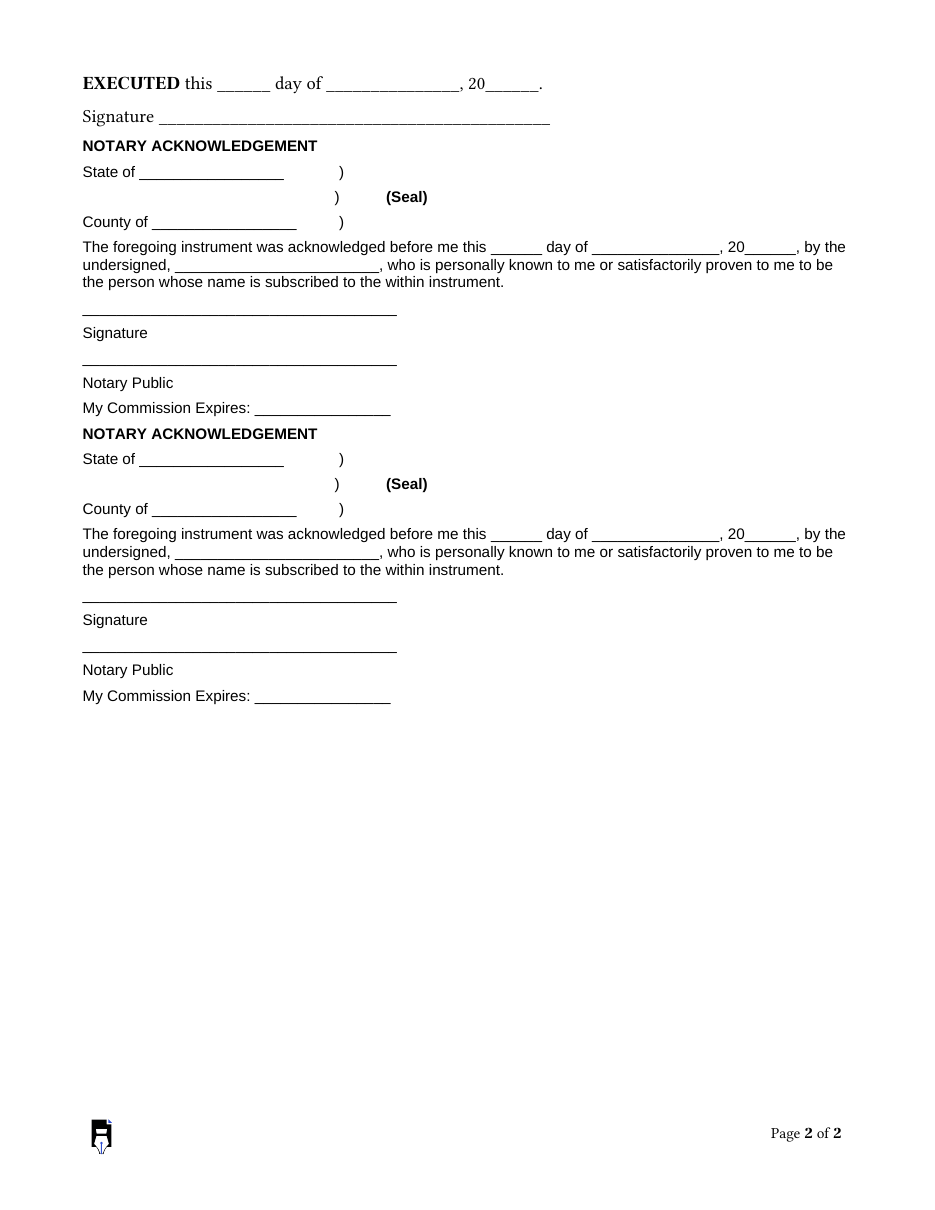
General warranty example 2: separate execution areas
Example 3: deed date and property details
This two-page example includes a deed-date field and space for the parties and property. Confirm the parties’ capacities, the complete description, substantive terms and current certificate requirements before use.
General warranty example 3: deed date and property details
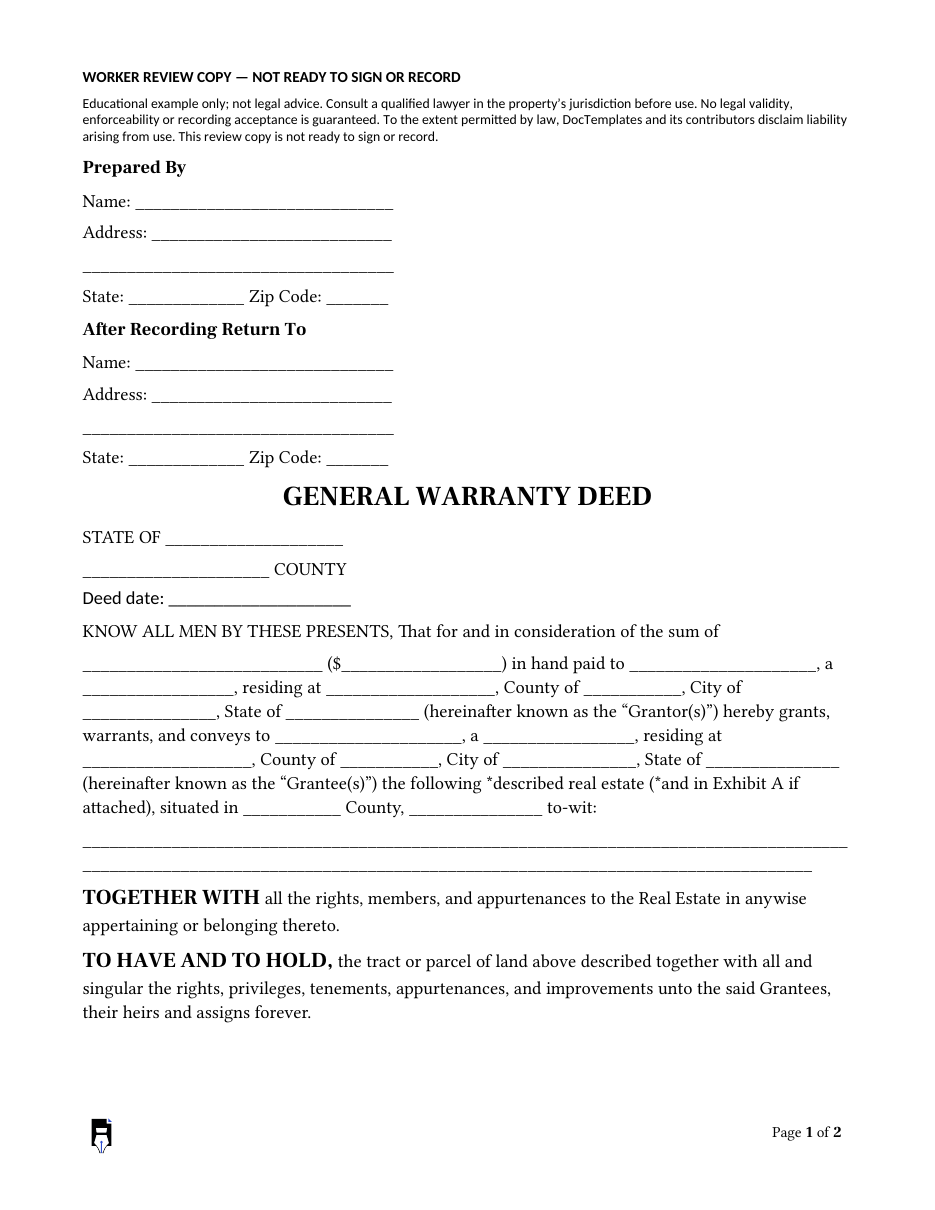
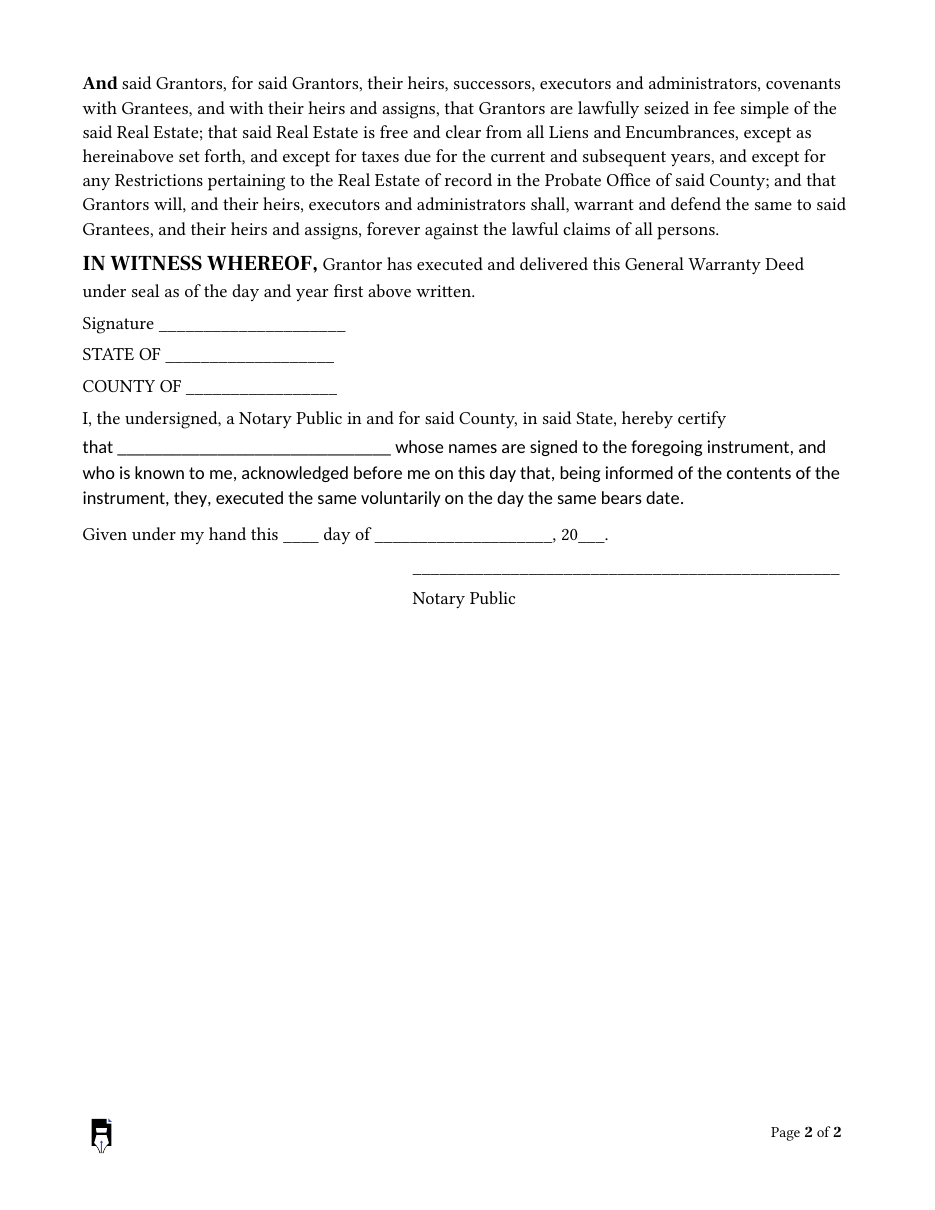
General warranty example 3: deed date and property details
What the warranty promises
A title covenant is a promise made by the grantor to the grantee. Its reach depends on the language and applicable law. It may address ownership, authority to convey, encumbrances and defense against lawful title claims. An express exception can affect the protection, so read it alongside the covenant.
Washington RCW 64.04.030 provides a statutory warranty-deed example. New York Real Property Law §253 explains specified covenant language, including ownership and authority, quiet enjoyment, encumbrances, further assurances and warranty. These sources illustrate particular jurisdictions; they are not a nationwide validity checklist.
A general warranty, special warranty, bargain-and-sale deed, grant deed and quitclaim deed are not interchangeable. Their covenants and effect require comparison under the applicable law. See the bargain and sale deed guide for a New York example and comparisons.
Start with current official state sources
The property’s location is the starting point. Use current issuing-authority resources and ask a lawyer to select the instrument and supporting documents for the actual transaction. These resources serve different purposes. None of the three, used alone, confirms that a deed is legally valid or ready to record.
Minnesota Uniform Conveyancing Blanks: the Department of Commerce provides official Minnesota conveyancing forms. Its instructions for that collection say to fill in or complete the forms without altering them; altered versions may not be accepted by county offices. This instruction concerns the official Uniform Conveyancing Blanks, not every deed example linked here. Commerce directs questions about selecting, completing or filing a form to an attorney.
Texas Property Code Chapter 5: this statute supplies Texas conveyance requirements. Sections 5.021–5.023 address the instrument of conveyance, a statutory general-warranty form and specified implied covenants. It is a legal reference for assessing the proposed transfer, not confirmation that a completed deed satisfies every applicable requirement. Ask a qualified Texas lawyer which provisions and exceptions apply.
California acknowledgment guidance: the Secretary of State provides notarial acknowledgment guidance and the certificate reference, including the required boxed identity notice. The acknowledgment concerns the signer’s identity; it does not establish the truth, accuracy or legal validity of the deed’s contents. It is not a complete deed or a recording-readiness check.
State-labeled examples also require current local review. A state name on a download does not establish that its terms, certificates, tax wording or recording details are suitable today.
Gather the facts before drafting
The warranty deed preparation worksheet organizes information for professional discussion. It does not transfer property and must not be signed or recorded as a deed.
Warranty deed preparation worksheet
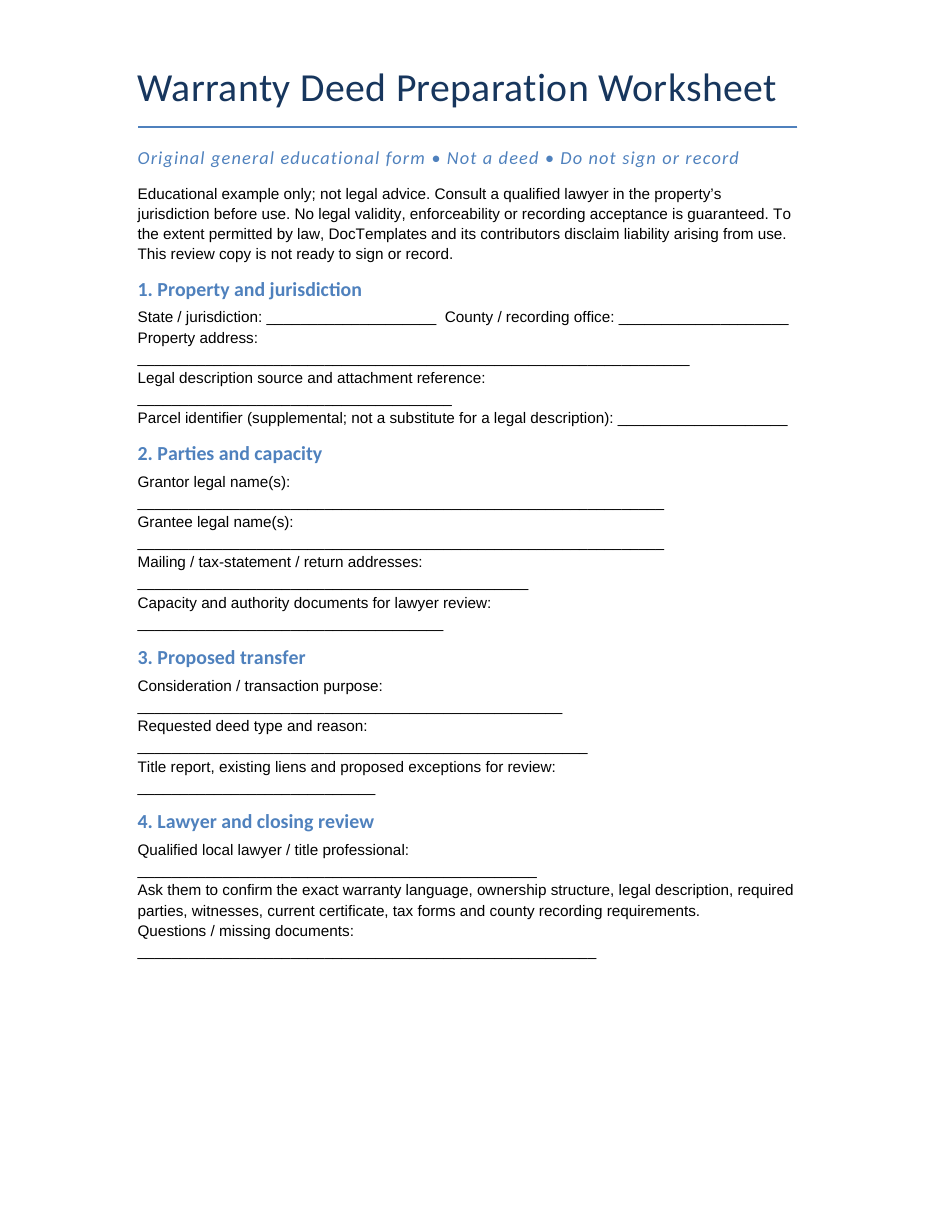
Warranty deed preparation worksheet
Collect the parties’ full legal names, signing capacities and authority documents; the property’s jurisdiction; the current deed and verified legal-description source; the proposed consideration and transfer purpose; and the title report, liens and intended exceptions. Keep a street address or parcel identifier as supplemental information rather than assuming it replaces the legal description.
Ask which ownership, marital-status, entity, estate or trust information is needed. Have the lawyer confirm required signers, witnesses, acknowledgment, tax statements and supporting filings. Confirm current recording-office submission details and fees separately. Never rely on an undated fee or an unchecked exemption statement.
Title review and insurance are separate
A title search helps identify issues for review. A deed warranty is a promise, while an insurance policy provides the coverage described in its terms. The CFPB’s owner’s title insurance explanation distinguishes the homeowner’s protection from a lender’s policy. Ask the title professional about the particular policy’s coverage, exclusions and conditions.
Before relying on a deed, resolve the legal questions and inspect every finished page for missing names, incomplete descriptions or exhibits, unfinished placeholders and cropped signatures. Formatting checks support a readable document; they do not establish enforceability or recording acceptance.
