



A bargain and sale deed transfers an interest in real property, but its name alone does not tell you which promises the grantor makes. Start with the property's jurisdiction and the actual covenants. New York and Washington, for example, use different statutory wording.
The New York example below is a learning aid for discussing a proposed transfer with a qualified local lawyer. The other three examples illustrate different deed types. These unreviewed examples must not be used to sign or record a transaction.
New York bargain-and-sale example
This two-page Word/PDF example contains New York wording, a covenant concerning acts of the grantor and a reference to the Lien Law trust-fund provision. Its acknowledgment area contains an instruction to obtain the correct certificate; that instruction is not a notarial certificate. Changing the state name would not make it suitable elsewhere.
New York bargain and sale example
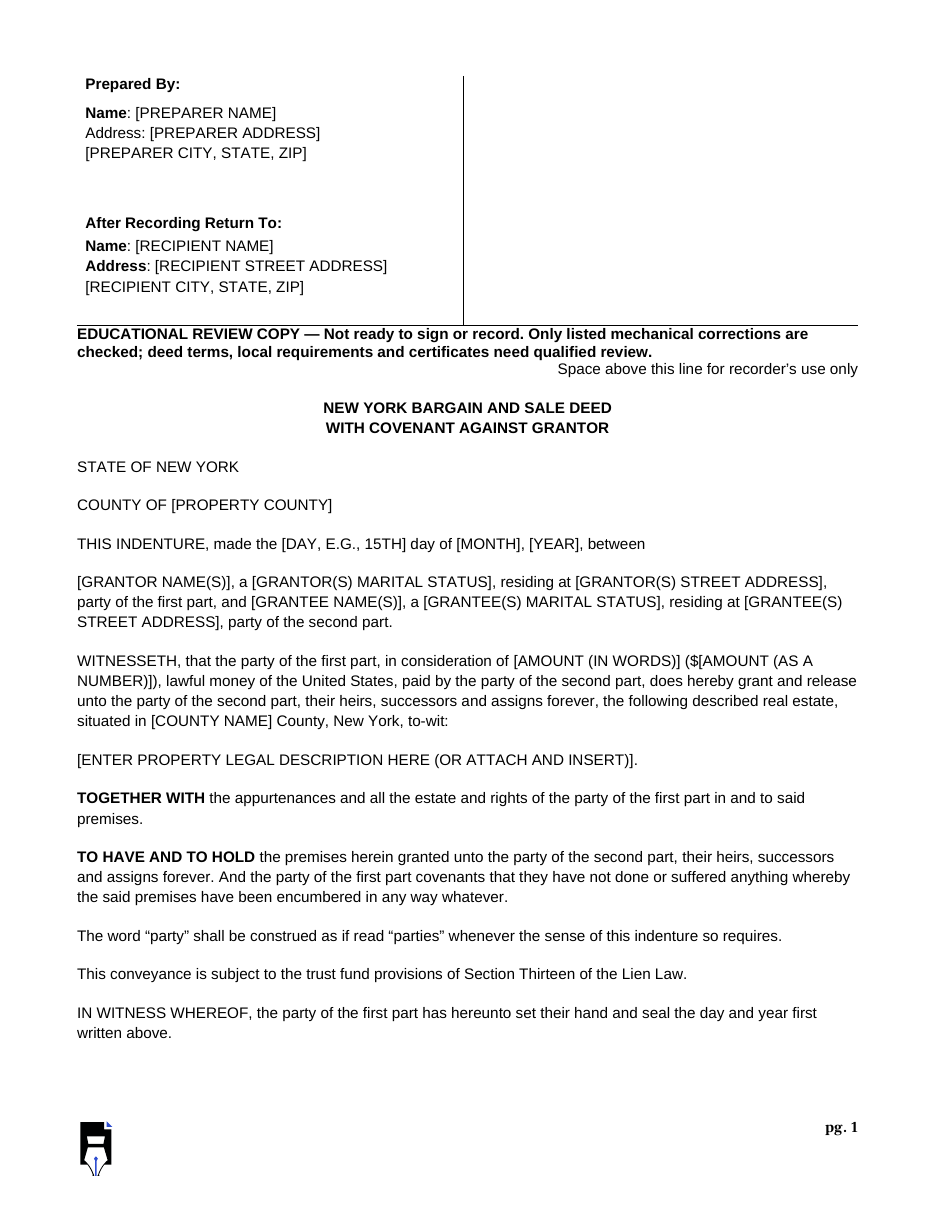
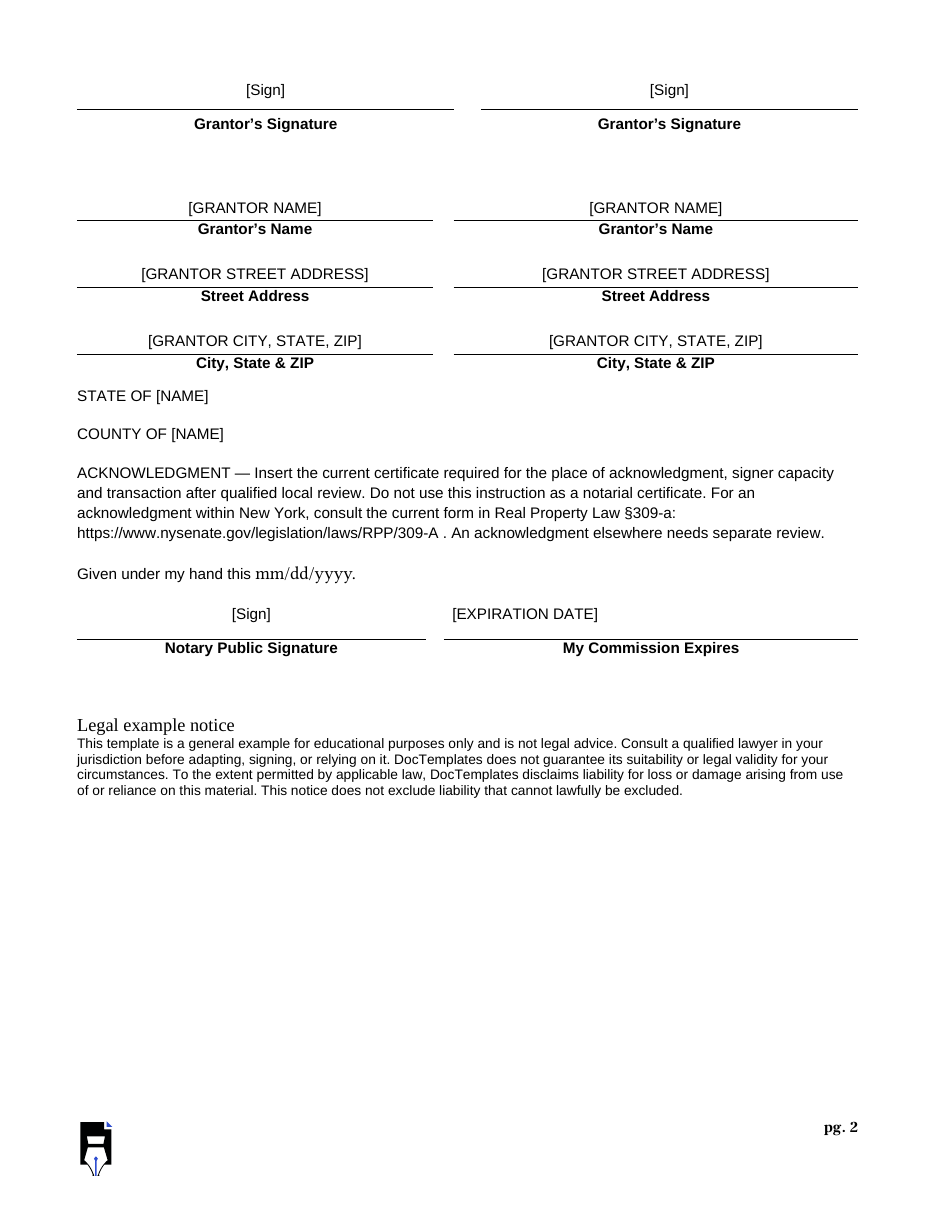
New York bargain and sale example
With or without a covenant against grantor acts
New York Real Property Law §258 includes bargain-and-sale forms both with and without a covenant against the grantor. The distinction matters: the covenant concerning the grantor's acts is not the same as a full set of title covenants. Have a lawyer identify which promises the transaction requires and how any exceptions affect them.
Washington's bargain-and-sale statute attaches specified covenants to its statutory form. It is therefore misleading to describe every bargain and sale deed as having no warranties. The governing law and exact language control.
Compare the other deed types
These comparisons help identify questions to ask; they do not select the correct instrument for your property. Each comparison file needs qualified jurisdiction-specific review before transaction use.
General warranty comparison
A general warranty deed commonly makes broader title promises than a deed limited to the grantor's own acts. Washington RCW 64.04.030 is one statutory example. Read the covenants and exceptions together. A promise about title does not guarantee the building's physical condition. Our general warranty deed guide explains that separate deed type.
General warranty comparison example
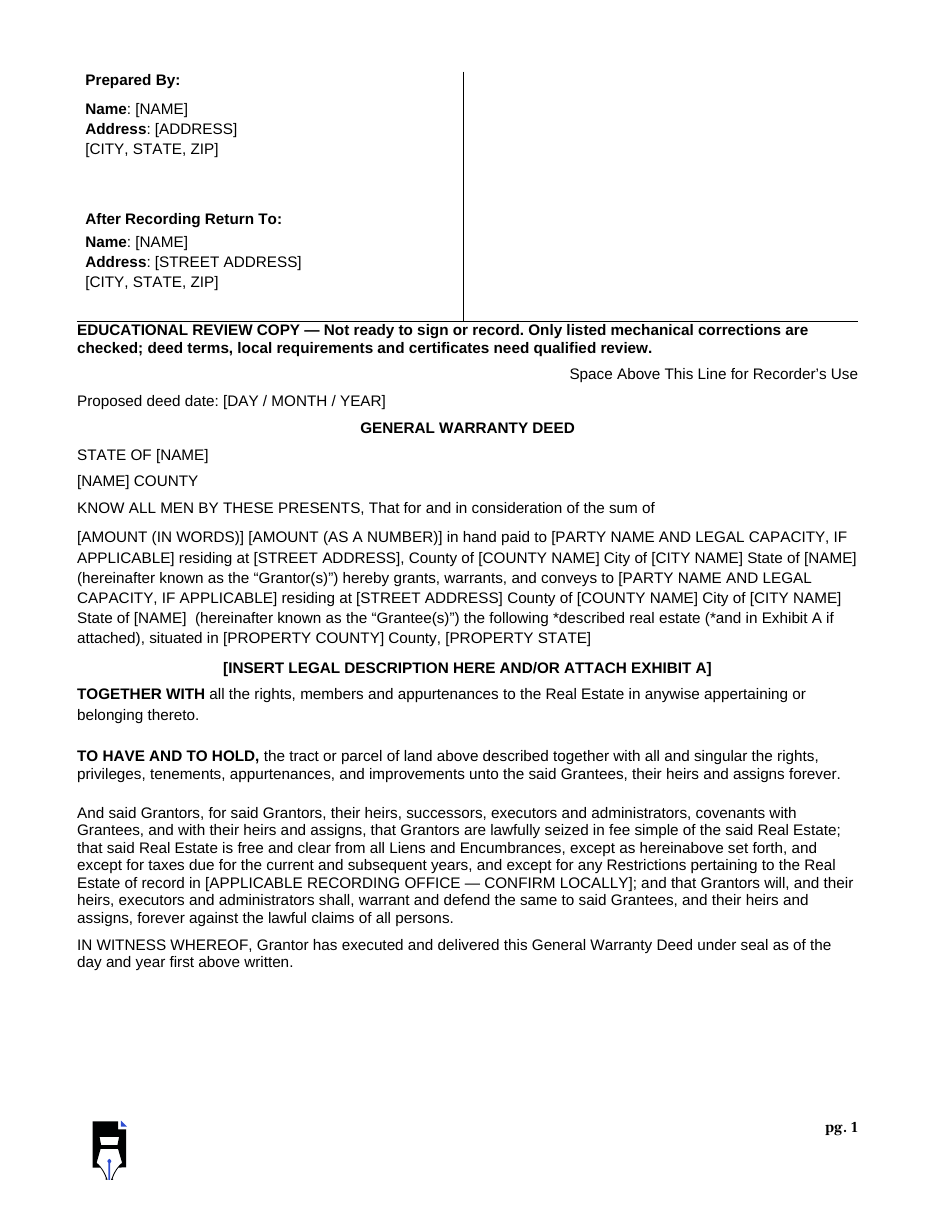
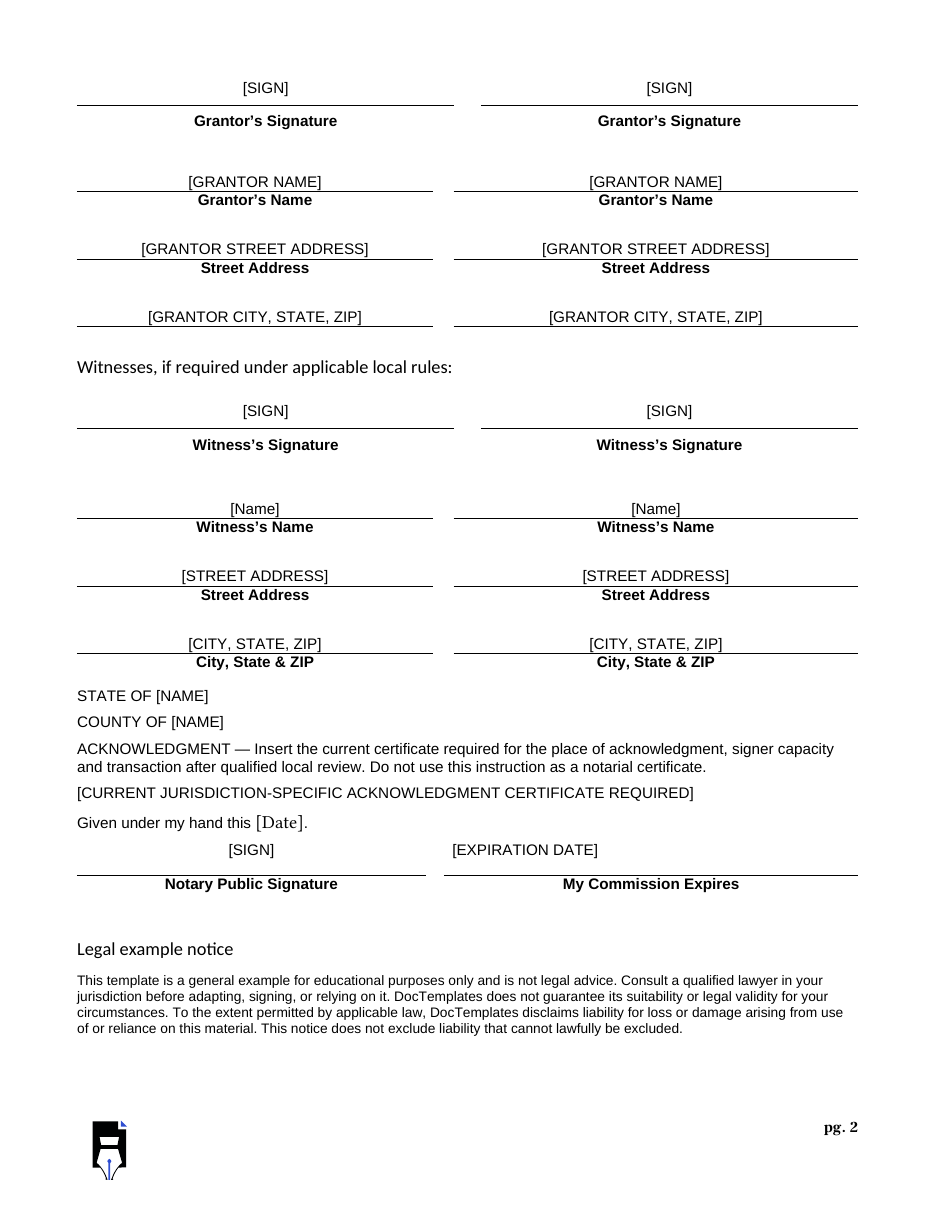
General warranty comparison example
Special warranty comparison
A special warranty deed commonly limits the grantor's title promises to specified grantor-related matters. Compare the actual limitation with the wider warranty language before deciding what protection is offered; the heading alone is insufficient.
Special warranty comparison example
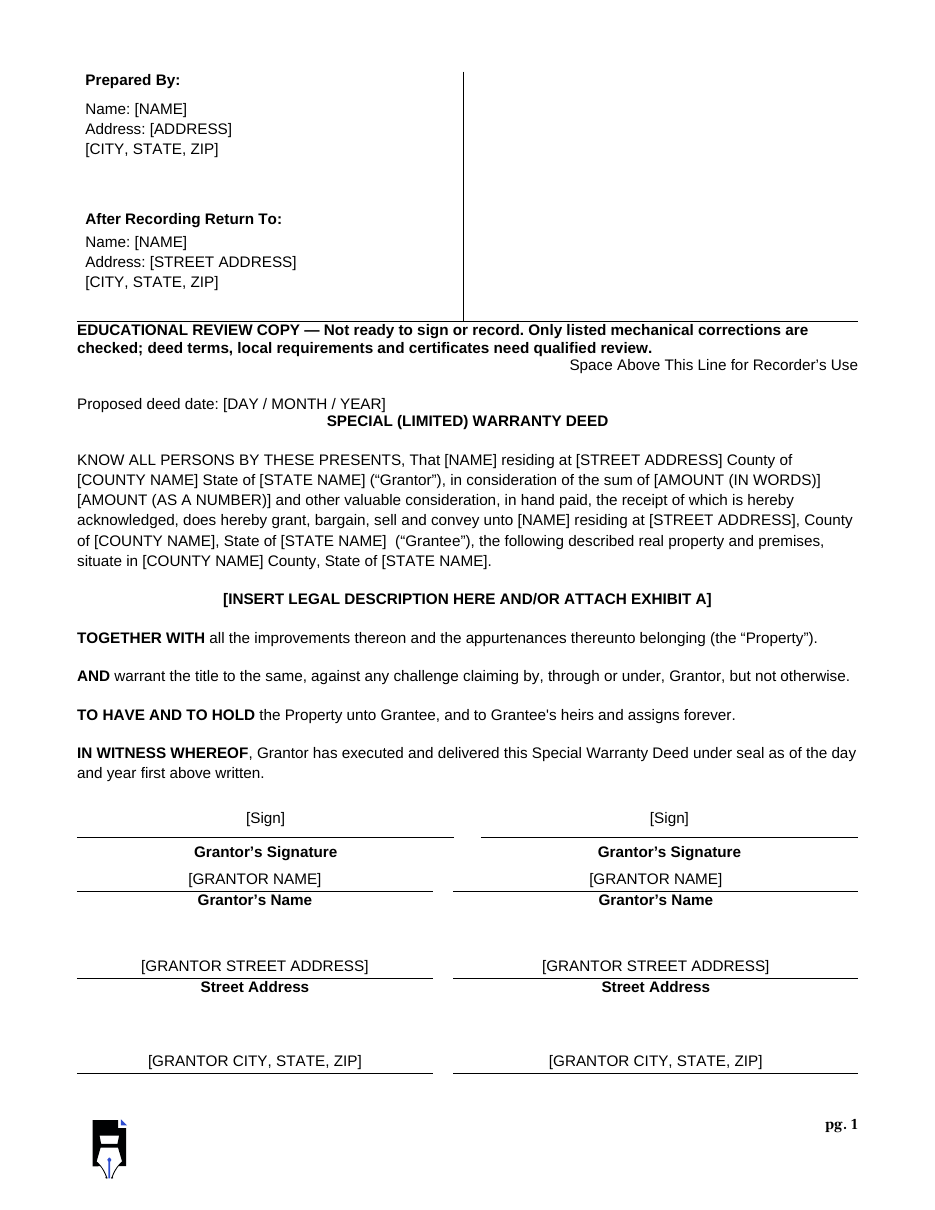
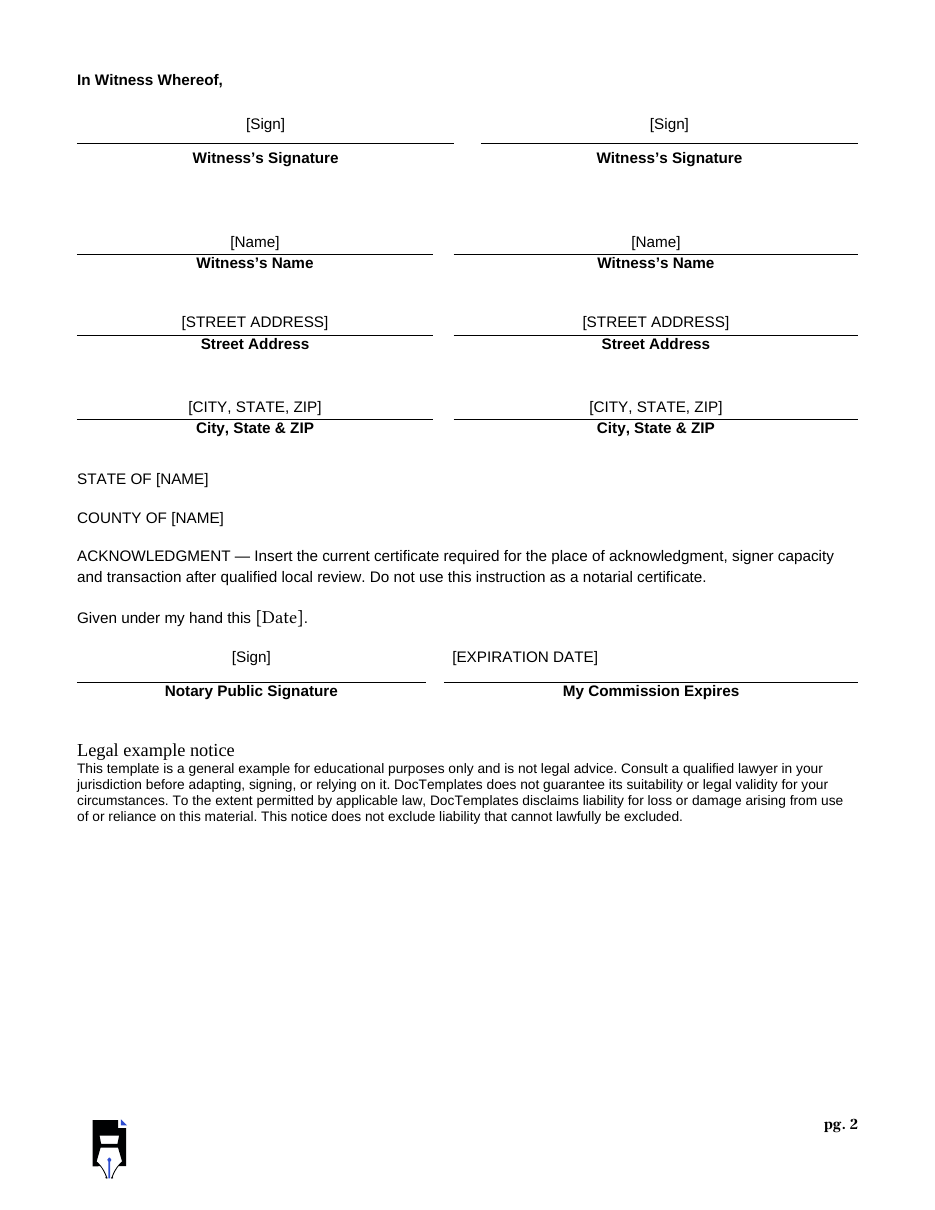
Special warranty comparison example
Quitclaim comparison
A quitclaim deed concerns the interest the grantor has without the same title warranties. It should not be described as necessarily transferring no title: Washington RCW 64.04.050, for example, addresses the grantor's existing legal and equitable rights.
Quitclaim comparison example
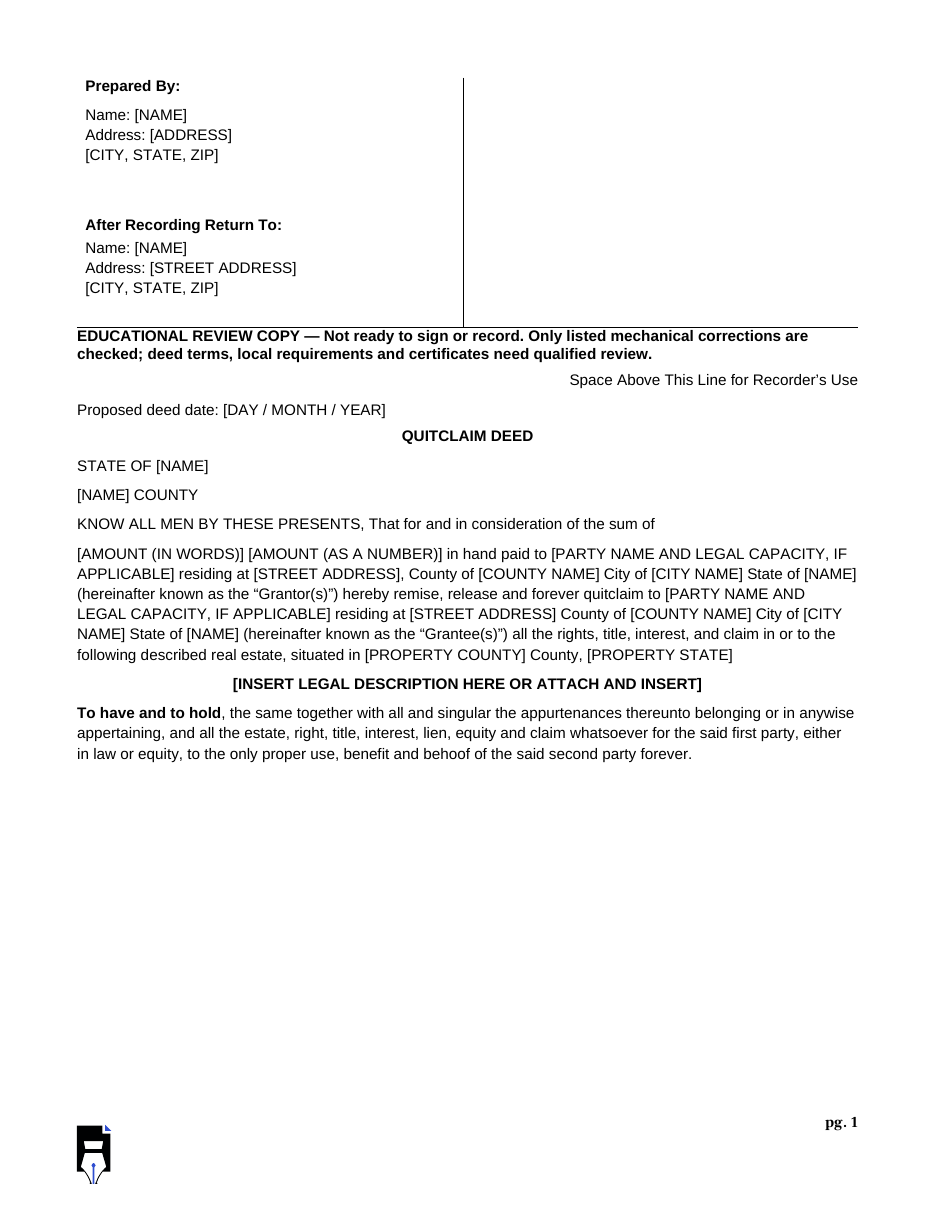
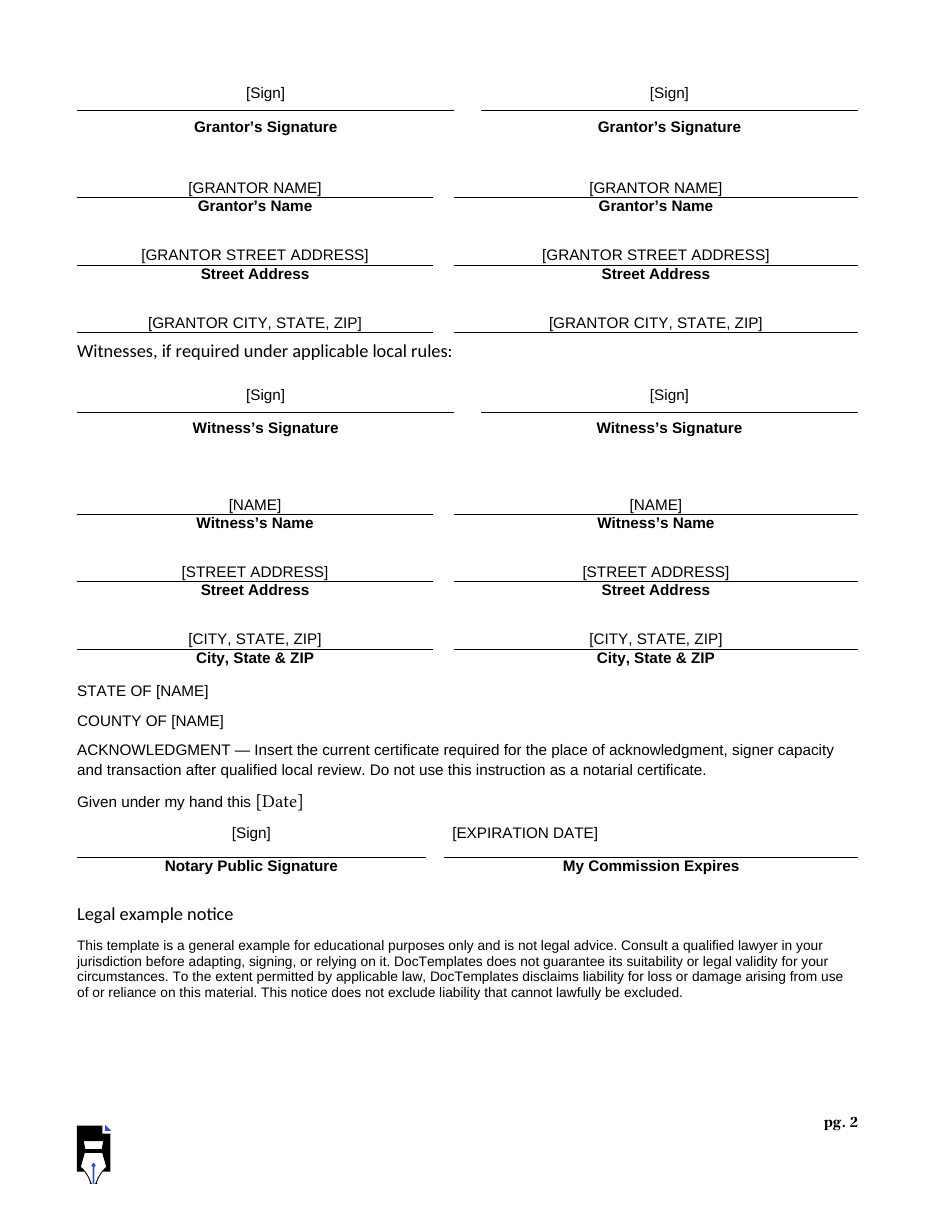
Quitclaim comparison example
Prepare information for your lawyer
Use the deed preparation worksheet to collect facts and questions. It is not a conveyance and must not be signed or recorded as a deed.
Deed preparation worksheet
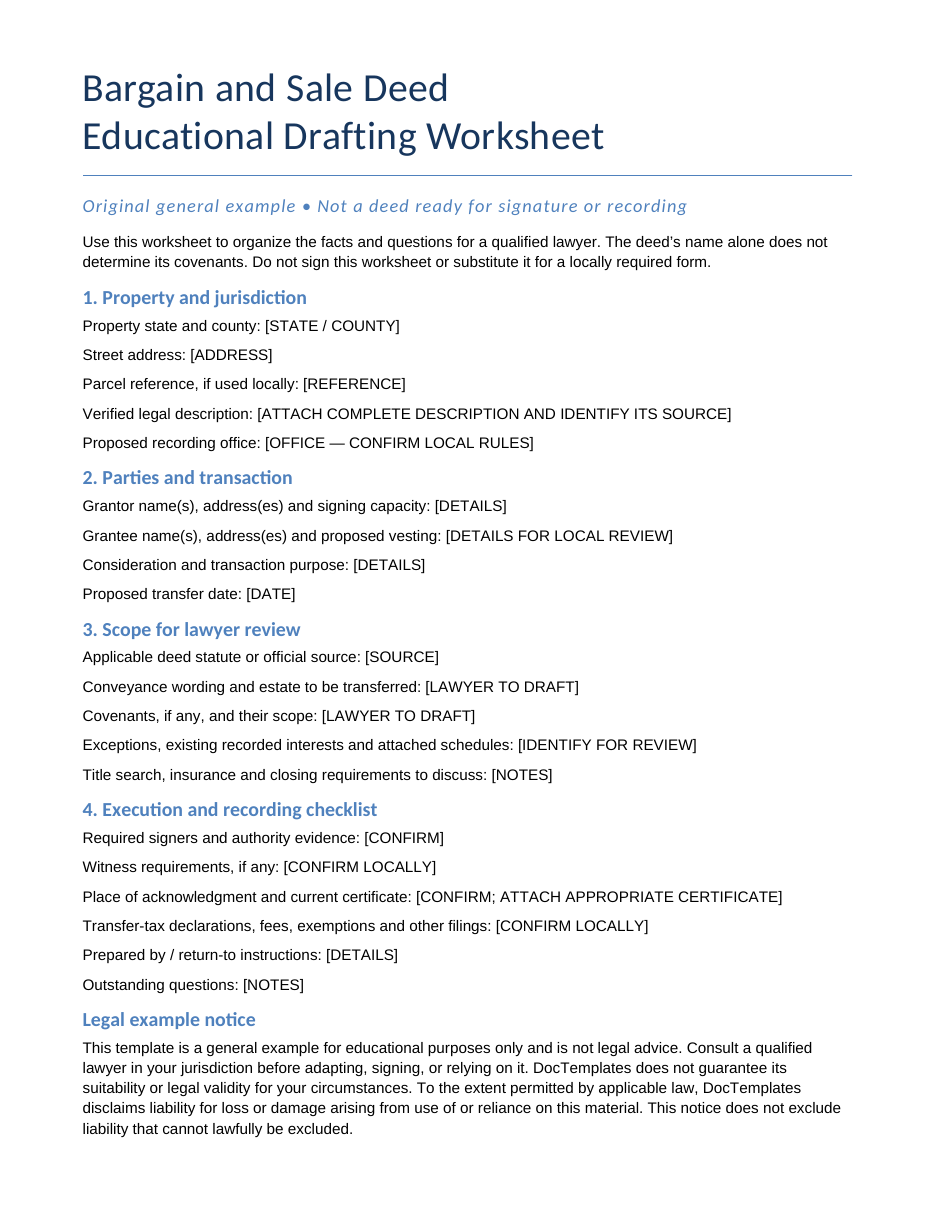
Deed preparation worksheet
Gather the parties' legal names and signing capacities, the current deed and complete legal-description source, the proposed consideration and transfer date, and the title report. A street address or parcel number should not be assumed to replace a legally sufficient description. Give the lawyer any company, trust or estate authority documents and relevant transaction papers.
Identify intended title exceptions without guessing or deleting an unfamiliar clause. Confirm the recipient for the recorded document and tax notices. Ask the appropriate recording office about current submission requirements, fees and accompanying forms, and have the legal requirements reviewed separately.
Resolve acknowledgment and execution requirements
New York Real Property Law §309-a provides acknowledgment language for the circumstances covered by that section. The location of acknowledgment and the signer's capacity matter. A certificate for a different jurisdiction or an instruction placeholder is not automatically suitable.
Before any use, a qualified lawyer must review the deed type, covenants, authority, legal description, exceptions, signing and witness requirements, acknowledgment, taxes and recording documents. Inspect the finished pages for missing exhibits, split signature blocks, cropped text and unfinished placeholders after those legal decisions are settled. A clean layout does not establish legal validity.
Does a deed clear liens or provide title insurance?
Do not assume that signing a transfer document removes existing liens or makes the buyer personally responsible for every debt. Those are transaction-specific questions for the lawyer and title professional.
Deed covenants and insurance are separate. The CFPB explains owner's title insurance as protection against covered ownership claims. Ask the insurer about the particular policy, conditions and exclusions instead of inferring coverage from the deed's name.
Legal example notice
This article and its authored examples are for general educational purposes only and are not legal advice. Consult a qualified lawyer in your jurisdiction before adapting, signing, or relying on a deed. DocTemplates does not guarantee suitability or legal validity for your circumstances. To the extent permitted by applicable law, DocTemplates disclaims liability for loss or damage arising from use of or reliance on this material. This notice does not exclude liability that cannot lawfully be excluded.
