


By preschool pickup, nobody wants another school bulletin.
Families are trying to remember whether tomorrow is pajama day, whether the permission slip is still in a backpack, and what their child meant by, “We made a rain cloud in a cup.” They want the short version: what happened, what’s coming next, and whether they need to do anything.
That’s what a good preschool newsletter gives them. It doesn’t have to sound official, and it certainly doesn’t have to squeeze in every activity. It just needs to feel like a useful note from people who know the children and understand how busy the hours between pickup and bedtime can be.
Start with the week you’re actually having
Some weeks, the newsletter is basically a rescue mission for the calendar. Picture day moved, the field-trip form is due, and every child needs an extra shirt by Thursday.
Other weeks are softer. Maybe the children spent three days building a cardboard city, finally learned the goodbye song without rushing, or became completely fascinated by the worms under the garden stones. That kind of week deserves a little room for a story.
Don’t force both weeks into the same layout just because it’s the one you used last Friday. Pick the template that gives this week’s most important message an easy place to land. Once families know where to find the dates, the classroom moment, and the “please do this” note, keep those pieces in roughly the same spots. Familiar is helpful.
Layouts for very different kinds of weeks
Weekly Learning and Vocabulary Preschool Newsletter
Weekly Learning and Vocabulary Preschool Newsletter
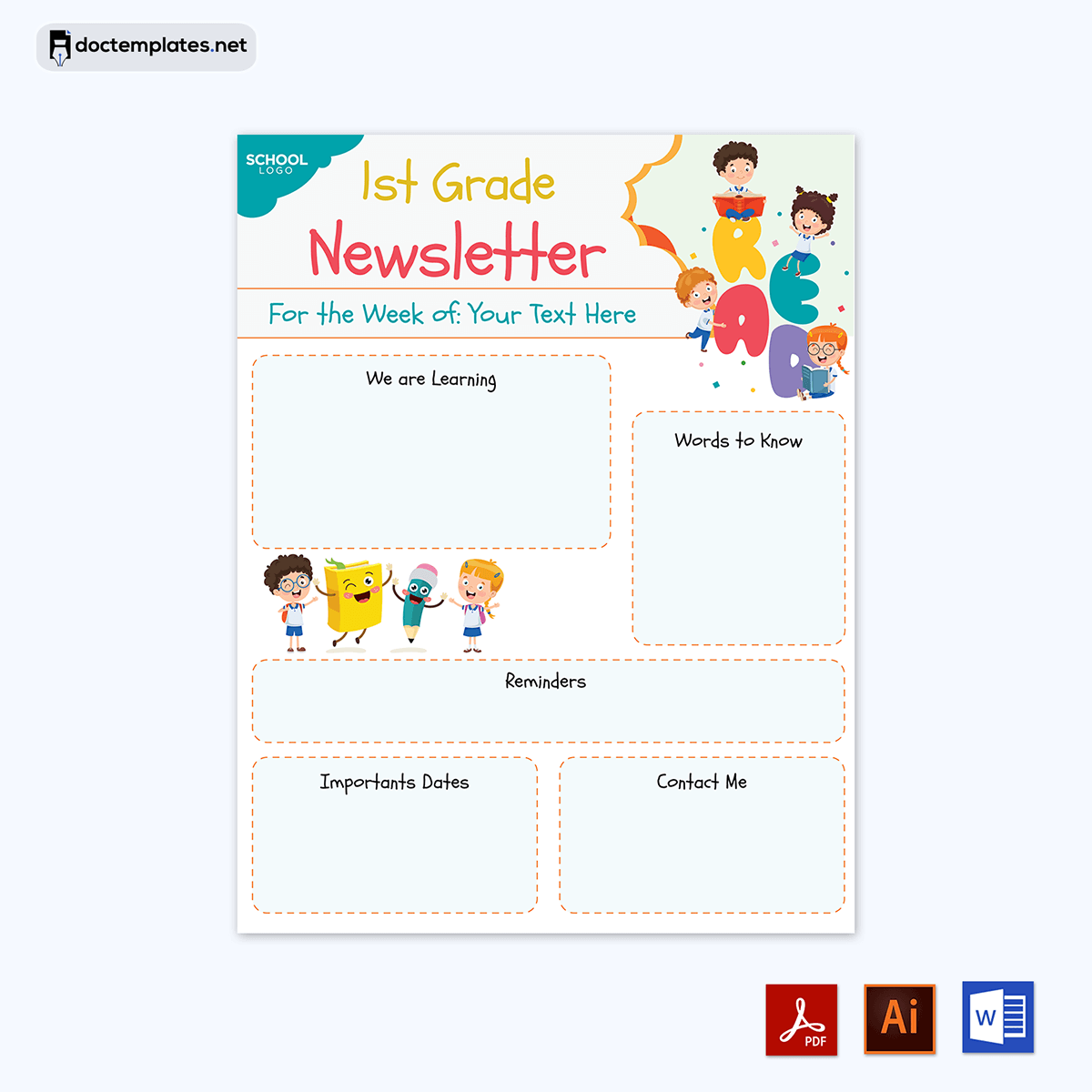
The first design keeps learning topics, words to know, reminders, important dates, and teacher contact details on one page. It’s a good fit for the Friday when you need to close the loop, not write a magazine. A parent can glance at it, spot the one thing that needs attention, and still see what the class has been doing.
The sample is written for first grade, but the structure can still work for preschool. Keep the boxes and soften the language. “Words We Practiced” might hold two or three words from a favorite song. “We counted the steps to the playground” will sound much closer to a child’s week than “numeracy focus.”
Monthly Preschool Newsletter
Monthly Preschool Newsletter
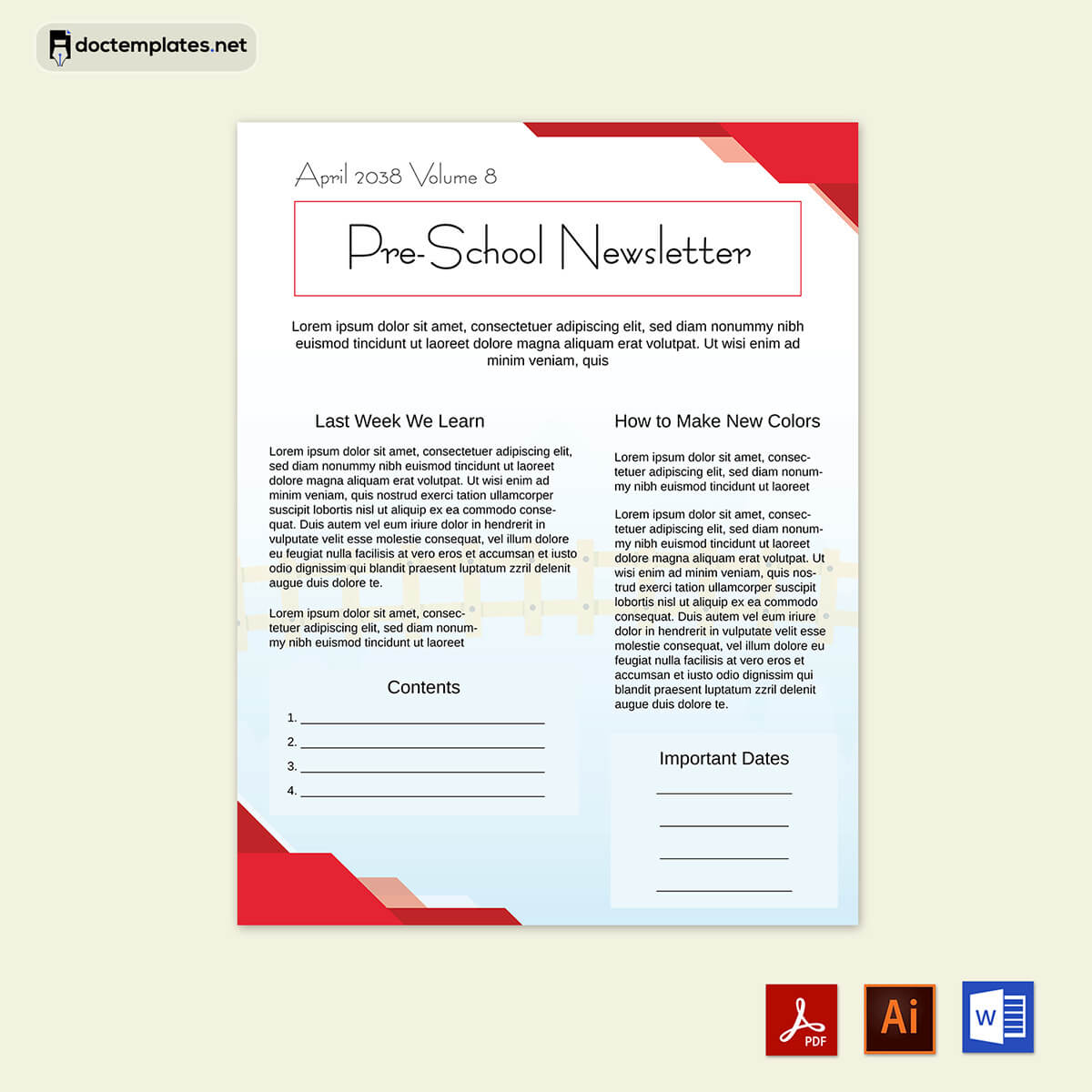
A month gives you more to say. A class project may have changed from week to week, a new routine may finally be clicking, and several dates may belong together. The two-column preschool design gives that fuller update room to breathe without making the page feel like a noticeboard.
You don’t have to fill every inch. Let one classroom moment carry the heart of the issue. A few sentences about planting seeds, learning to zip coats, or making room for a shy classmate will stay with a family longer than a paragraph that names every theme and learning standard. Put the urgent dates where they’re easy to find, then let the rest feel unhurried.
Preschool Center Newsletter
Preschool Center Newsletter
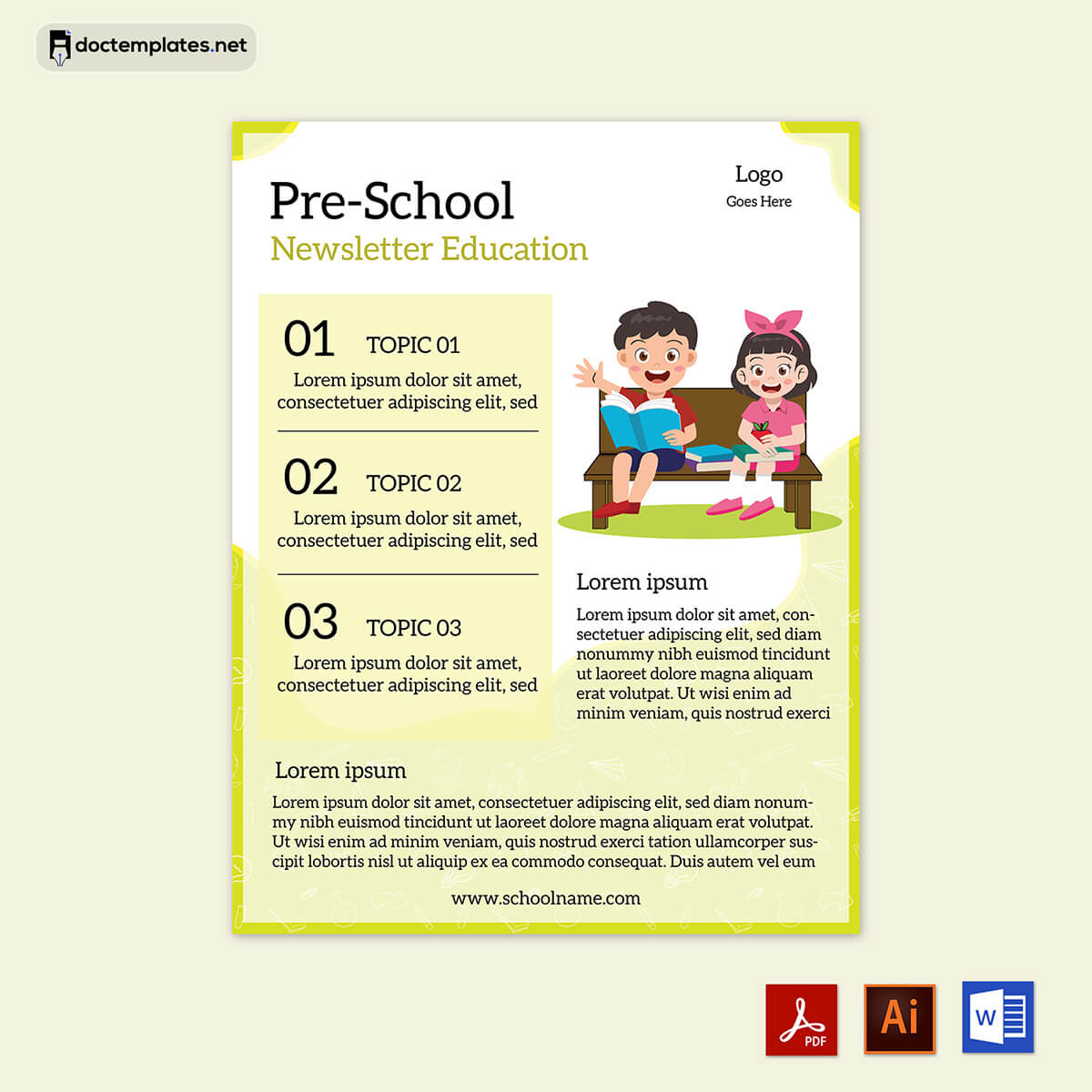
Sometimes the message is bigger than one classroom. A director may need to introduce a new staff member, explain a holiday schedule, welcome families back, or share news that affects every room. The branded center layout has space for a logo, short topic areas, a feature image, and a website or contact line.
Start with the sentence you’d say if the family were standing at the front desk. “We’re happy to have everyone back” feels warmer than “Please be advised that the center has resumed operations.” You can still be clear and professional. You just don’t need to sound like a circular.
Weekly Preschool Learning Update
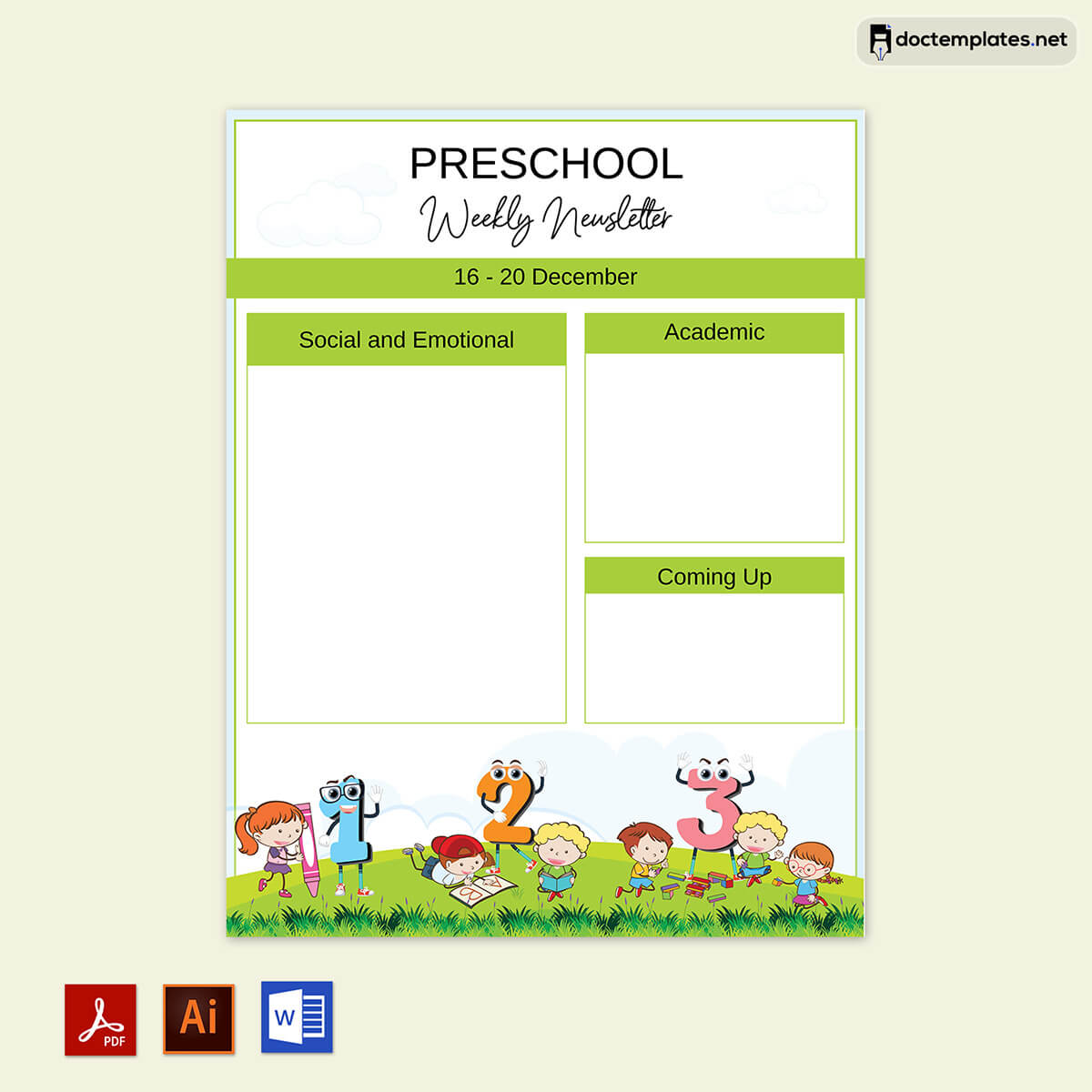
Weekly Preschool Learning Update
This preschool weekly layout separates social-emotional learning, academic learning, and what’s coming up. It also includes a date range, which is surprisingly useful when a printed copy turns up in a cubby two weeks later.
The section names may sound formal, but your writing doesn’t have to. “We practiced waiting for a turn at the water table” is social-emotional learning in language a family can picture. “We compared which blocks made the tallest tower” is an academic moment and an easy conversation starter. “Please send old clothes for painting next Wednesday” tells someone exactly what to do.
Preschool Events and Reminders Newsletter
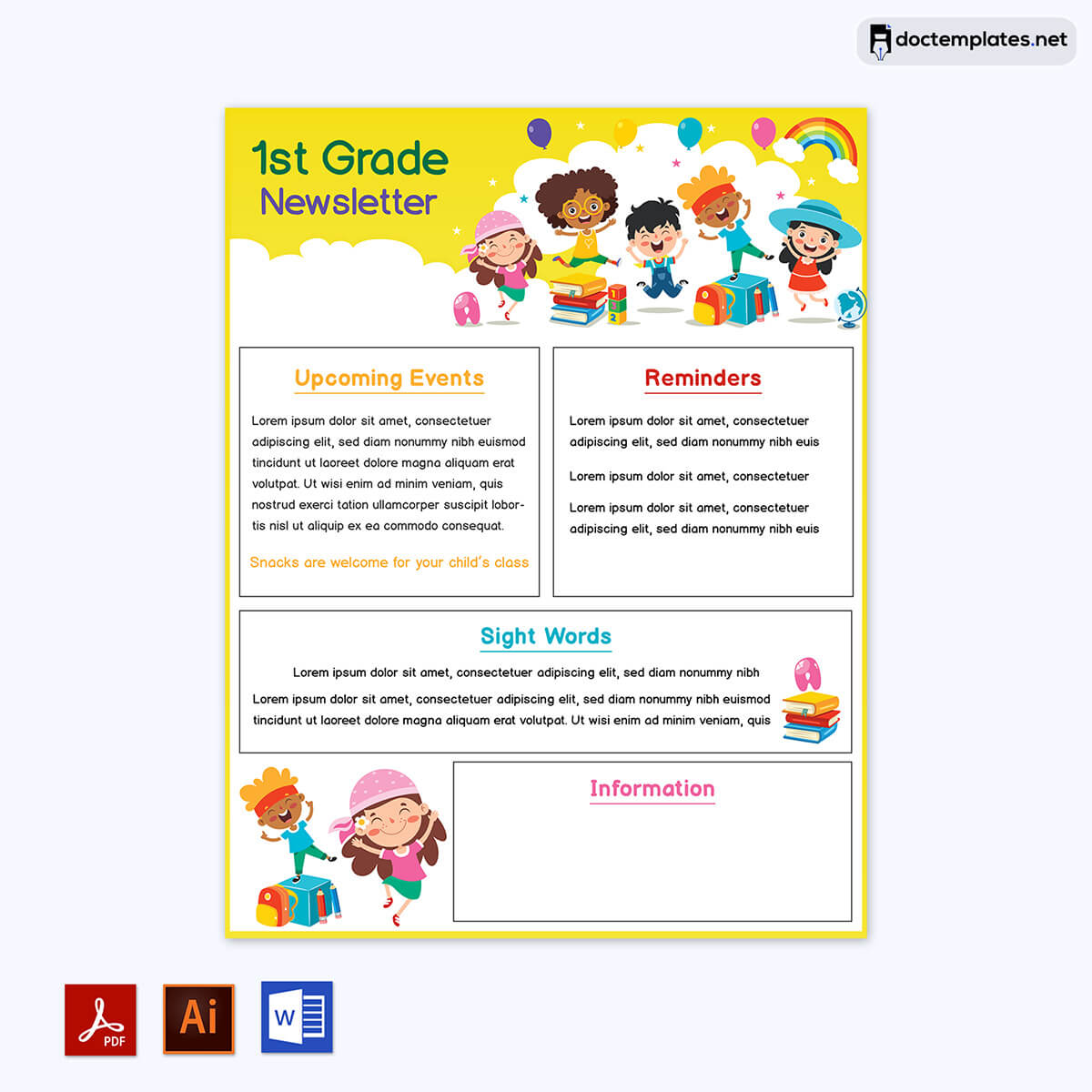
Preschool Events and Reminders Newsletter
Field trips, picture day, a classroom celebration, and a form that needs to come back can bury the classroom story fast. This layout gives events and reminders their own clear spaces, while leaving room for learning words and general news.
Its preview is also labeled for first grade, so rename the sections for preschool. “This Week,” “Dates to Remember,” “Words We Practiced,” and “A Note for Families” will do the job. Put the deadline first. A warm sentence can come next, but nobody should have to hunt for the fact that a permission form is due tomorrow.
Preschool Family Update Newsletter
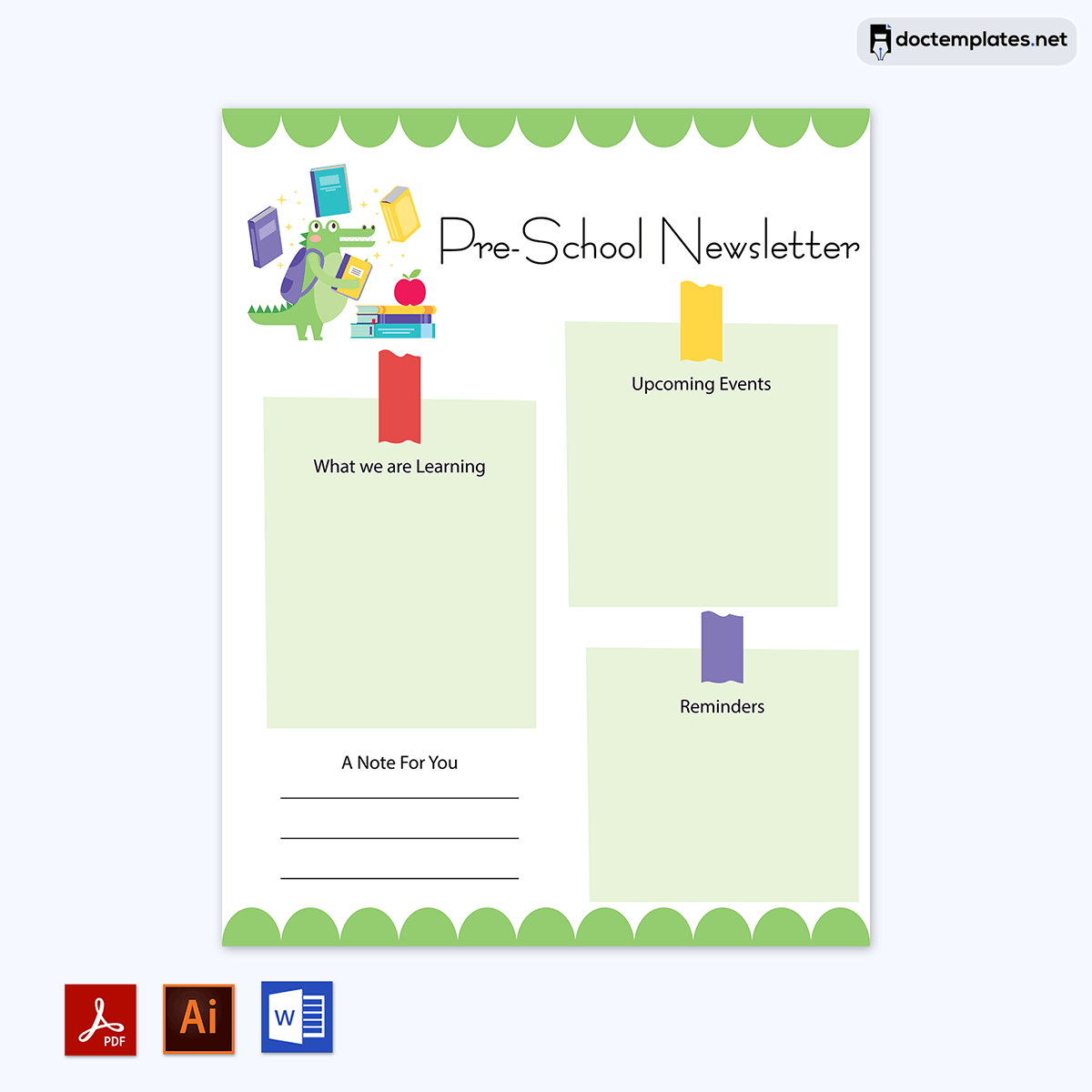
Preschool Family Update Newsletter
There’s real relief in a format you don’t have to rethink. This preschool-specific design brings together “What We Are Learning,” “Upcoming Events,” “Reminders,” and “A Note for You.” It gives the page enough shape to stay organized without making it feel stiff.
The personal note is where the newsletter can sound most like your room. Thank families for sending recycled boxes. Celebrate the way the class helped a new child settle in. Explain why the morning routine is changing. Keep the dates in the events area, where they’re easy to scan, and let the note carry the warmth.
School Welcome Newsletter
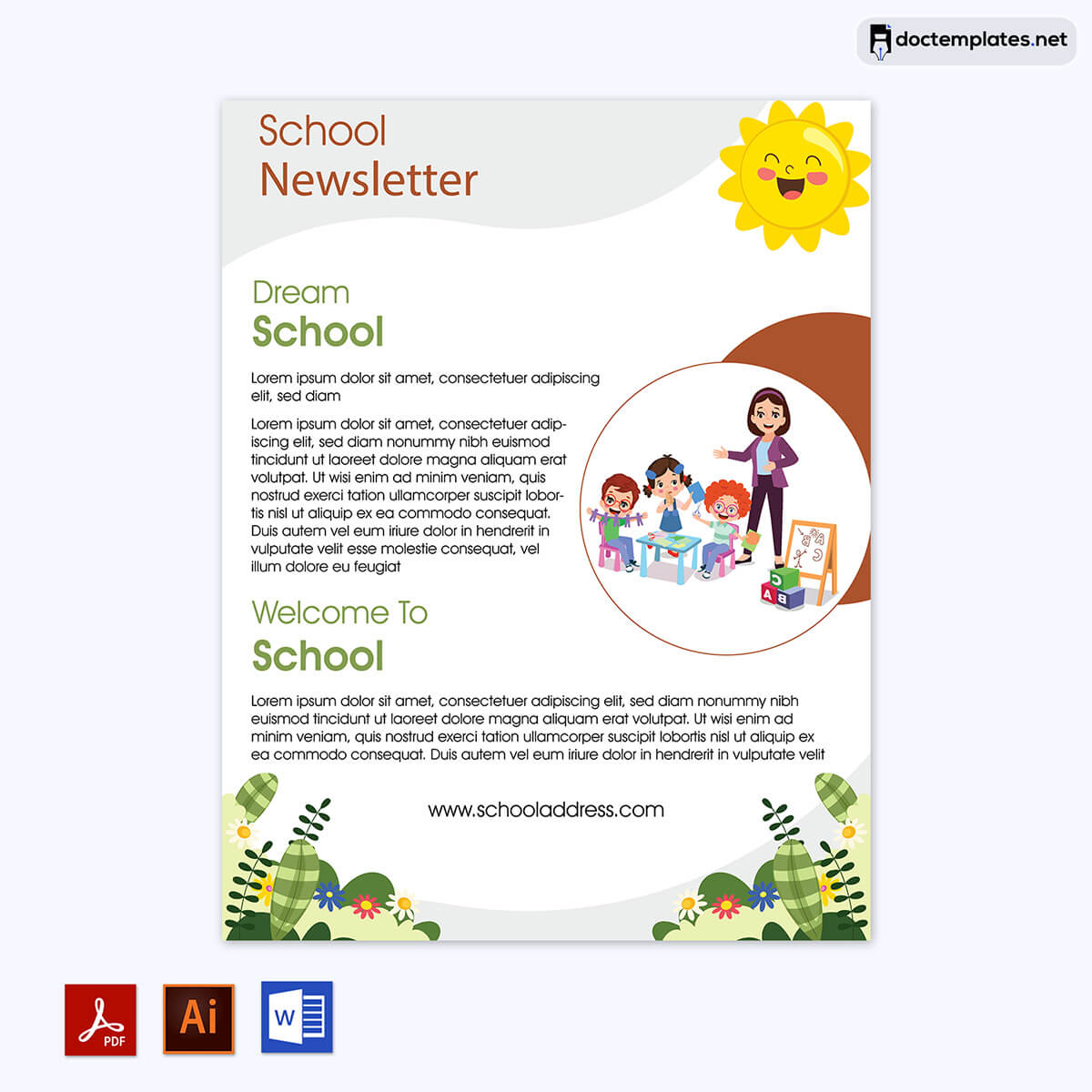
School Welcome Newsletter
The school welcome design steps back from one classroom. Its welcome message, feature-story space, and website footer make it better suited to news shared across a school or larger program. Use the feature area for something that needs a little explaining, such as a new staff introduction, a family event, or a change that will affect daily routines.
Because the layout is broad, make every time-sensitive detail obvious. Give it a date and a clear action. A lovely feature story shouldn’t make the registration deadline harder to find.
New Student Preschool Welcome Newsletter
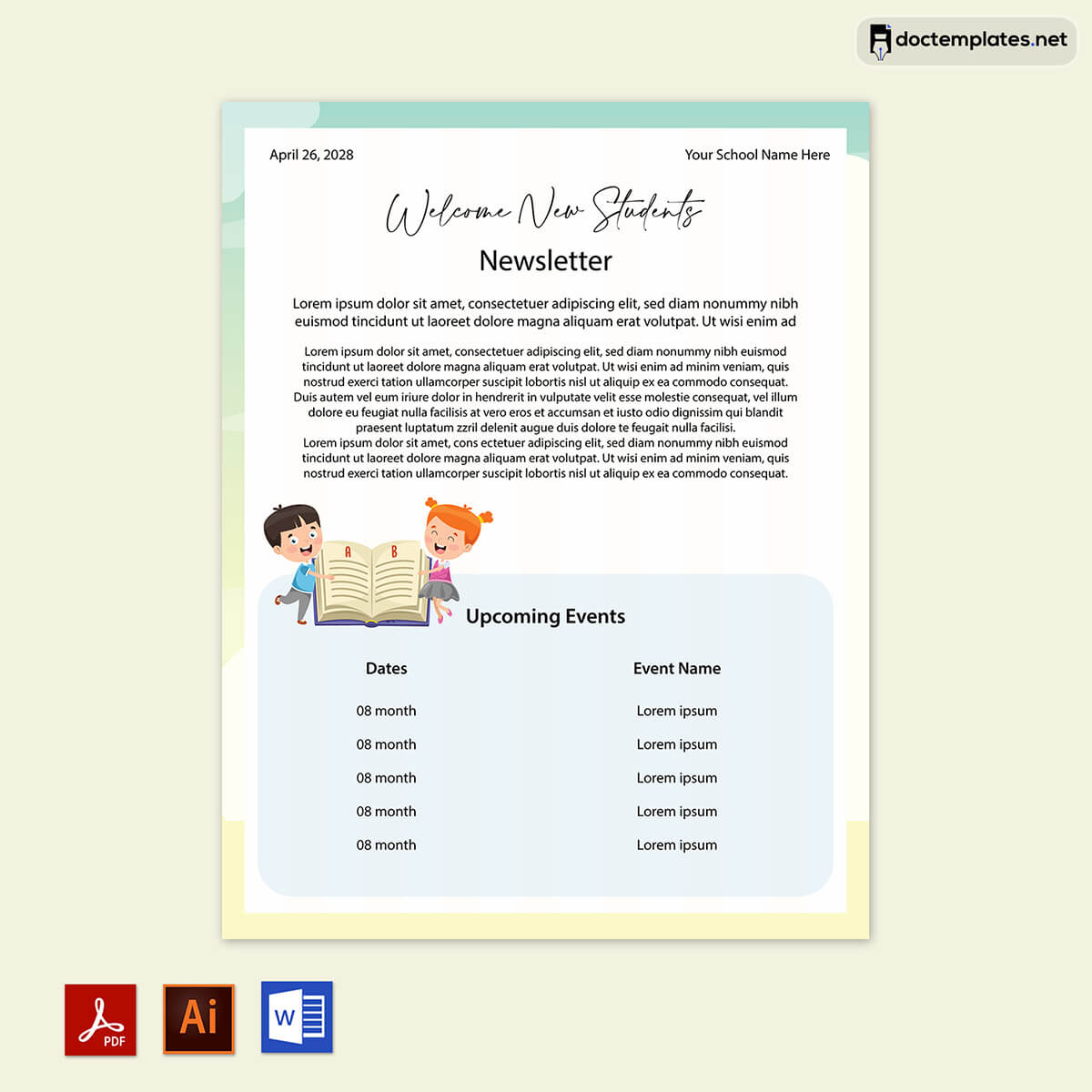
New Student Preschool Welcome Newsletter
Starting preschool can feel enormous, even when everyone is excited. Families may be wondering about goodbye routines, lunch containers, nap items, pickup names, and what happens if their child cries. They may not know which question is too small to ask.
This design pairs a new-student welcome with an events table, so it works naturally for orientation, enrollment season, or the first week in a new room. Write the way you’d want a nervous family to be welcomed: kindly, plainly, and with enough detail to make tomorrow feel manageable. Explain what the first day will look like, what to bring, which dates are confirmed, and who will answer the next question.
Make the page sound like your classroom
A template can organize the page. The language is what makes it feel trustworthy.
Picture someone opening the newsletter between pickup and dinner, or on a phone while they’re looking for a lost shoe. The first few lines should answer the questions already in their head: What happened? What’s next? Do I need to do anything?
Specific details are where the warmth comes from. “We learned about insects” is fine. “The children gently moved a beetle off the bike path and then drew what they noticed” gives a family a scene to picture and a question to ask at dinner. “Bring outdoor clothing” is easy to miss. “Please send a labeled sun hat by Tuesday” is much easier to act on.
The sample wording is only there to get you started. Replace it with the phrases families already hear from you. Instead of “Math Focus,” try “We sorted buttons by color and size.” Instead of “Upcoming Curriculum,” write, “Next week, we’re turning the dramatic-play corner into a grocery store.” It isn’t less professional. It’s simply clearer, and it sounds like real life in the room.
Blank space is allowed, too. If there isn’t an important reminder this week, remove the box or use it for a photo caption, a question families can ask at home, or nothing at all. A calmer page is often easier to read than a full one.
And leave the door open. The National Association for the Education of Young Children describes family communication as regular, frequent, and two-way, while recognizing that the right method can differ from one family to another. A simple “You’re always welcome to reply,” followed by a clear email address, phone number, or pickup-time contact, can turn the newsletter into part of the relationship instead of a one-way announcement.
Language access needs the same thoughtfulness. The U.S. Department of Education’s guidance for immigrant and multilingual families encourages welcoming communication. Plain words, explained school terms, and translated or interpreted support can make a short newsletter feel much more useful—and far less intimidating.
Use the file format that keeps your week easy
The visible download choices include Microsoft Word, PDF, and Adobe Illustrator (AI). For most teachers and front-office teams, Word will be the comfortable working copy. You can replace the sample text, move a section, and save a new issue without opening design software.
Once the newsletter is ready, export a PDF for printing or email so the layout stays in place. Illustrator makes sense when someone on the team wants deeper control over the colors, graphics, or brand details. If several people prepare the newsletter, keep one editable master and use a simple class-and-date file name. That way, nobody has to guess which version is current.
Choose a rhythm you can actually keep
A short weekly note can be lovely when the classroom changes quickly and families need regular reminders. A biweekly or monthly newsletter may be kinder to your schedule when there’s less to report. The right rhythm is the one that gives families something useful without leaving you scrambling to fill empty space.
If you’re creating updates for several age groups, these classroom newsletter templates and kindergarten newsletter templates can help you keep a related look while changing the language and expectations. For messages that come from the whole center or school, the school newsletter templates offer broader layouts.
Whatever schedule you choose, let the familiar pieces stay familiar. When dates, learning moments, and contact details appear in roughly the same places, families know where to look. You spend less time rebuilding the page, and the newsletter can feel like what it should be: a warm, useful note from the people who shared a child’s day.
